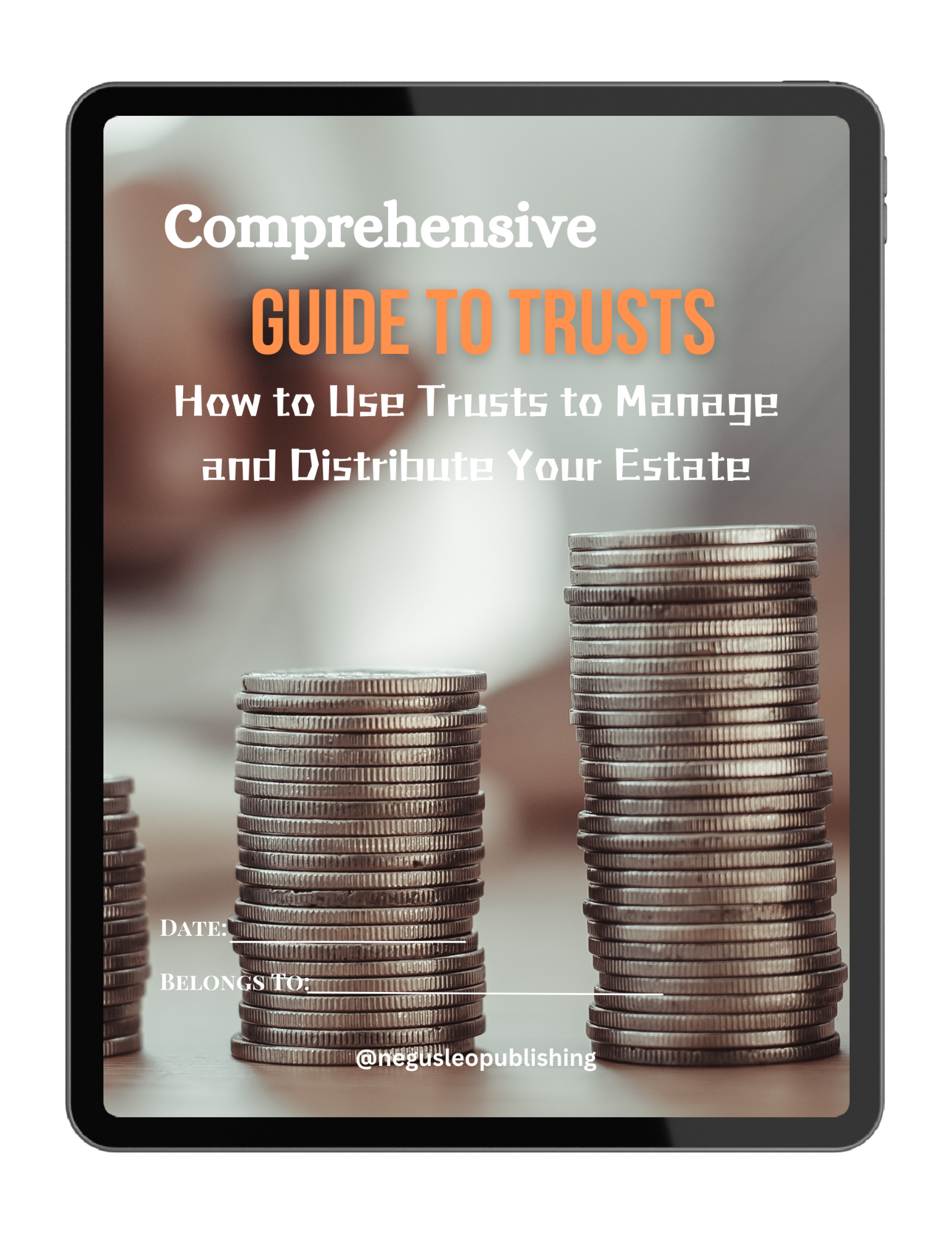
Comprehensive Guide to Trusts: How to Use Trusts to Manage and Distribute Your Estate
$0.00
Comprehensive Guide to Trusts: How to Use Trusts to Manage and Distribute Your Estate is a practical estate planning guide designed to help individuals and families understand how trusts can protect assets, avoid probate, reduce taxes, and preserve wealth for future generations.
This book explains the core types of trusts, including revocable living trusts, irrevocable trusts, charitable trusts, special needs trusts, and asset protection trusts, while showing readers how each structure serves different financial and family goals. Readers learn how trusts help maintain privacy, manage incapacity, protect beneficiaries, and provide greater control over when and how inheritances are distributed.
The guide also walks through the real mechanics of trust planning, including choosing trustees, funding trusts properly, transferring real estate and financial accounts, and avoiding common estate planning mistakes that can leave trusts ineffective. Advanced strategies for business succession, creditor protection, tax reduction, and family wealth preservation are explained in a clear and accessible way.
Whether creating a first estate plan or improving an existing one, this book provides a structured roadmap for using trusts to protect assets, support loved ones, and create a lasting financial legacy with greater confidence and control.
Description
Comprehensive Guide to Trusts: How to Use Trusts to Manage and Distribute Your Estate is a practical estate planning resource designed to help individuals and families understand how trusts work, why they matter, and how they can be used to protect wealth, avoid probate, and create long-term financial stability for future generations.
This guide breaks down the often confusing world of trusts into clear, understandable concepts without drowning readers in legal jargon. It explains the core structure of trusts, including the roles of the grantor, trustee, and beneficiaries, while showing how different trust strategies can be used to control asset distribution, protect heirs, reduce taxes, and safeguard family wealth. Readers learn the difference between revocable and irrevocable trusts, how specialty trusts function, and why certain trust structures are commonly used for asset protection, charitable planning, business succession, and special needs planning.
The book goes beyond theory by showing readers how trusts operate in real-world estate planning. It explains how trusts help families avoid probate, maintain privacy, manage incapacity, and establish conditions for inheritance distributions. Rather than simply handing over assets outright, the guide demonstrates how trusts can be structured to distribute wealth gradually, support education goals, protect vulnerable beneficiaries, and preserve family assets from creditors, lawsuits, and financial mismanagement.
A major strength of the book is its practical focus on implementation. Readers are guided through the process of selecting trustees, funding trusts properly, transferring real estate and financial accounts into trusts, and setting customized distribution instructions. The guide also addresses one of the biggest failures in estate planning: creating trusts that are never properly funded or updated. It walks readers through common mistakes, life-event updates, and maintenance strategies that help keep estate plans effective over time.
Advanced planning strategies are also explored in detail, including tax-reduction planning through irrevocable trusts, charitable trusts, family business trusts, ILITs, and spendthrift provisions. The book explains how trusts can minimize estate and gift taxes while helping families preserve business continuity and multigenerational wealth. It also examines how trusts can be structured to reduce family disputes and provide clearer succession planning for complex estates and closely held businesses.
More than a legal reference, Comprehensive Guide to Trusts functions as a working roadmap for people who want greater control over how their legacy is protected and distributed. Whether readers are building an estate plan for the first time, updating outdated documents, protecting business assets, or planning for children and future generations, this guide provides a structured and accessible framework for using trusts as a long-term wealth management and estate protection tool.
Reviews
There are no reviews yet.