Estate Planning Meeting Preparation Guide
$0.00
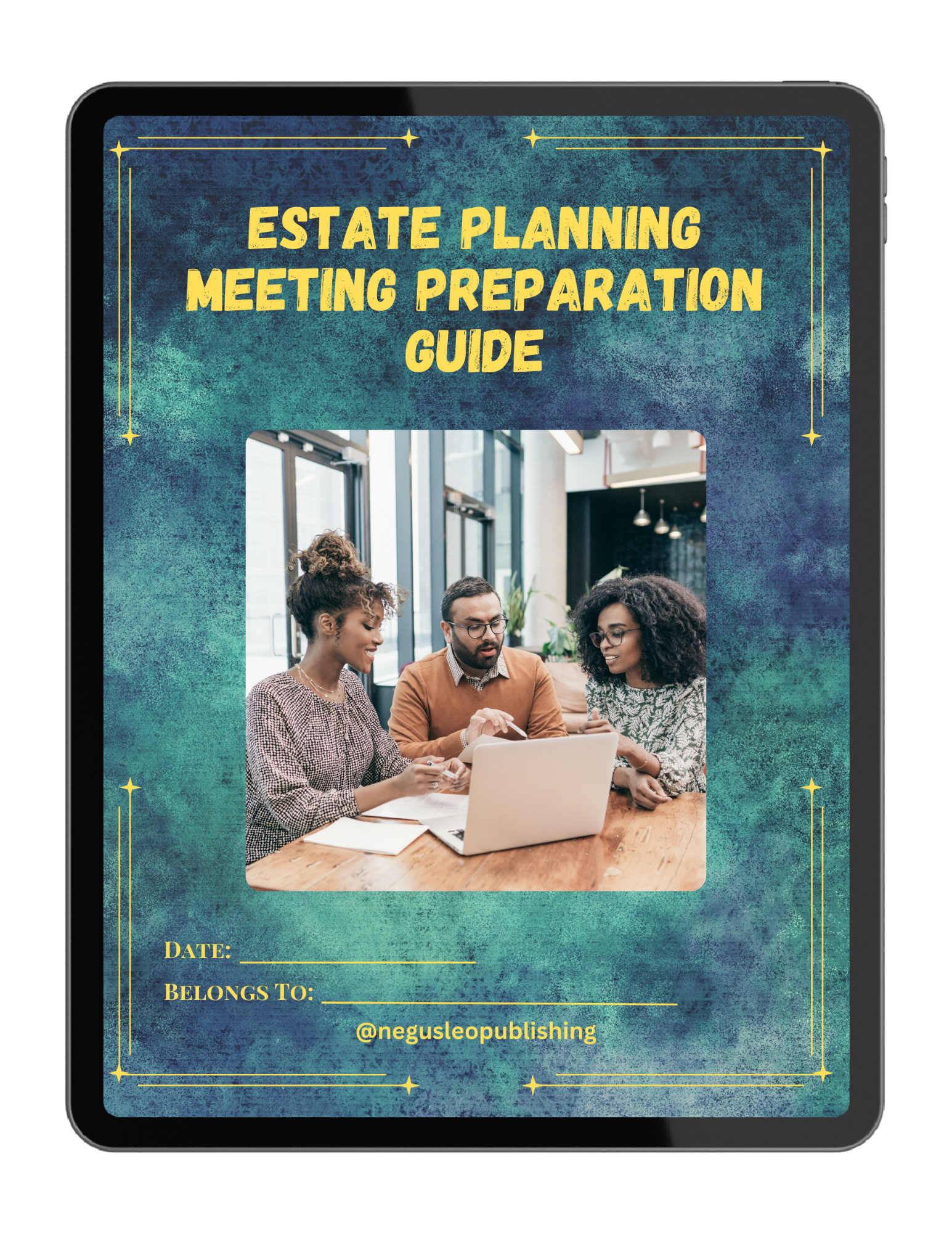
Estate Planning Meeting Preparation Guide is a practical workbook designed to help individuals and families prepare for estate planning consultations with greater organization, clarity, and confidence. Instead of entering meetings overwhelmed by legal terms and financial paperwork, this guide helps readers gather the critical information needed to create a strong estate plan and make informed decisions about their future.
The book walks readers through organizing personal and financial information, including real estate, bank accounts, investments, retirement assets, business interests, insurance policies, liabilities, and existing estate planning documents. It also explains the role of wills, trusts, powers of attorney, healthcare directives, and beneficiary designations in protecting assets and supporting loved ones.
Readers are guided through important planning goals such as wealth transfer, tax minimization, charitable giving, business succession, asset protection, and care planning for dependents. The guide also includes key questions to ask estate planners and tax advisors, helping readers participate more confidently in planning discussions.
Whether preparing for a first consultation or updating an existing estate plan, this workbook provides a clear roadmap for organizing information and protecting your family’s future.
Description
Estate Planning Meeting Preparation Guide is a practical planning workbook designed to help individuals and families walk into estate planning consultations organized, informed, and prepared to make better long-term decisions. Instead of showing up to meetings overwhelmed by legal language and financial uncertainty, readers are guided through a structured process that helps them gather essential information, clarify their goals, and understand the key issues that shape a successful estate plan.
The guide walks readers step by step through the foundational elements estate planners and tax advisors need to build an effective strategy. It covers personal information, financial inventories, real estate holdings, retirement accounts, investments, business interests, insurance policies, liabilities, and existing estate planning documents. Readers are encouraged to organize assets, identify debts, review beneficiary designations, and prepare supporting records before consultations begin, reducing confusion, delays, and costly oversights.
Beyond document preparation, the workbook focuses heavily on strategic thinking. It helps readers define their goals around wealth transfer, tax minimization, charitable giving, business succession, asset protection, and care for dependents or family members with special needs. The guide explains how wills, trusts, powers of attorney, healthcare directives, and beneficiary designations work together within a broader estate planning strategy, giving readers a clearer understanding of the decisions they will need to make.
A major strength of the book is its emphasis on asking smarter questions. Dedicated sections help readers prepare for conversations with estate planners and tax professionals by outlining critical topics such as trust selection, estate tax reduction strategies, business transfer planning, charitable giving options, investment structures, and asset protection techniques. Rather than remaining passive during consultations, readers are equipped to engage in informed discussions about protecting their family, preserving wealth, and reducing future legal and financial complications.
The guide also addresses modern estate planning concerns often ignored in basic planning materials. It includes sections on digital assets, cryptocurrency, intellectual property, international holdings, evolving tax laws, and the importance of regularly reviewing estate plans as financial situations and family structures change over time. These additions recognize that modern estates are increasingly complex and require more than a simple will to manage effectively.
More than a checklist, Estate Planning Meeting Preparation Guide functions as a preparation system that helps readers organize both their financial lives and their thinking before major estate planning decisions are made. Whether preparing for a first estate planning consultation, updating outdated documents, protecting business assets, planning for retirement, or organizing generational wealth transfer, this guide provides a clear and structured framework for entering those conversations with greater confidence, clarity, and control.
Reviews
There are no reviews yet.