
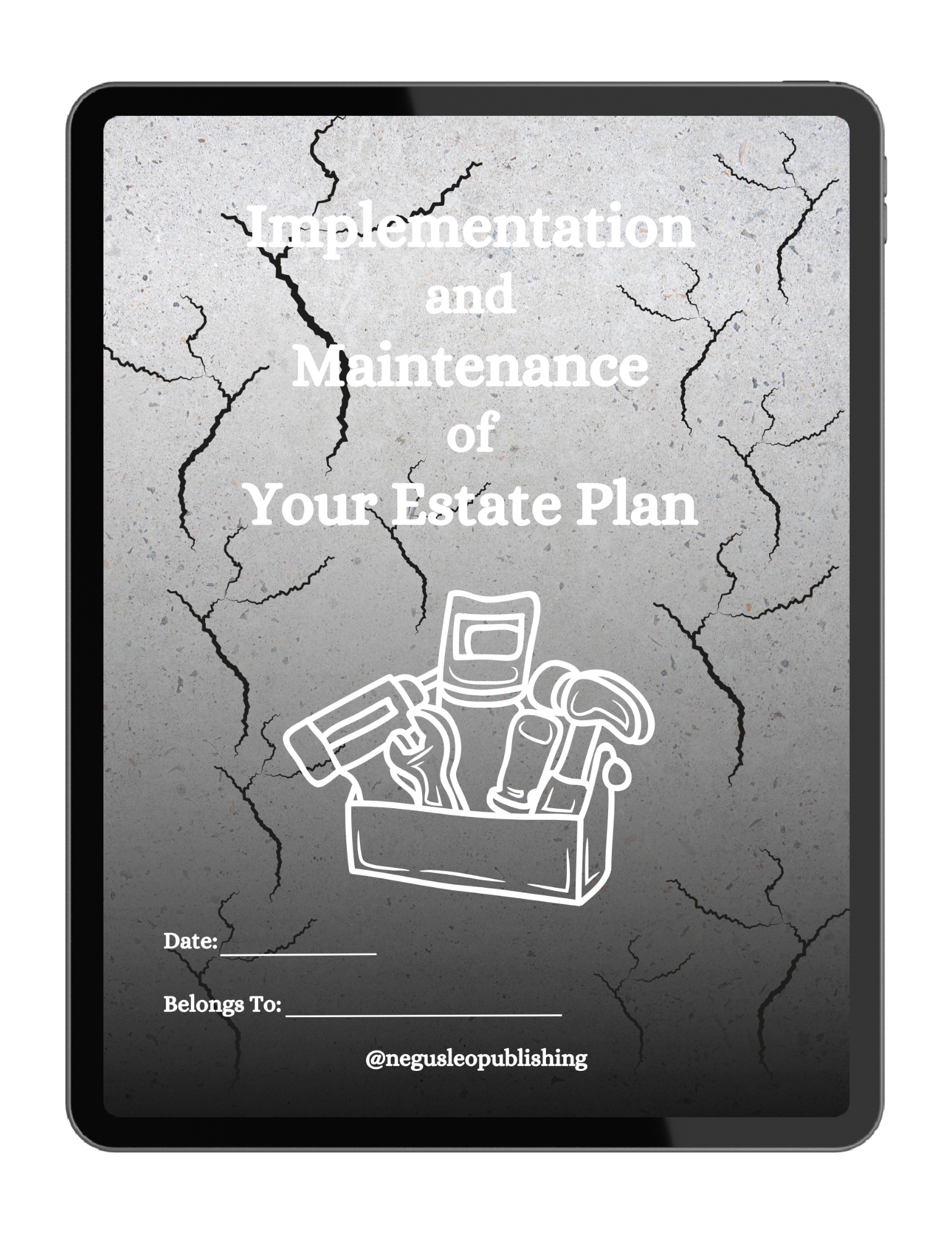
Implementation and Maintenance of Your Estate Plan
$0.00
Implementation and Maintenance of Your Estate Plan is a practical estate planning workbook designed to help individuals keep their estate plans organized, effective, and up to date long after documents are signed. Instead of treating estate planning as a one-time task, this guide explains how wills, trusts, powers of attorney, beneficiary designations, and tax strategies must be regularly reviewed and maintained as life circumstances change.
The workbook walks readers through implementing estate plans properly by transferring assets into trusts, updating beneficiary information, organizing legal documents, notifying executors and trustees, and securely storing important records. It also provides annual review schedules, maintenance checklists, legal change trackers, and life event worksheets that help readers update their plans after marriage, divorce, births, deaths, relocations, or major financial changes.
Readers are also introduced to digital storage tools, automated reminders, family communication strategies, and advanced estate planning concepts such as trusts, tax reduction strategies, and asset protection planning.
Whether managing a simple estate or preserving generational wealth, this workbook provides a structured framework for maintaining a clear, organized, and legally effective estate plan over time.
Description
Implementation and Maintenance of Your Estate Plan is a comprehensive estate planning workbook designed to help individuals move beyond simply creating estate documents and focus on the ongoing work required to keep an estate plan effective over time. Rather than treating estate planning as a one-time event, this guide emphasizes that wills, trusts, powers of attorney, beneficiary designations, and tax strategies must be actively implemented, reviewed, updated, and maintained as life circumstances and laws evolve.
The workbook begins with a detailed implementation checklist that walks readers through the critical steps often overlooked after estate documents are signed. Readers learn how to properly execute wills and trusts, transfer ownership of assets into trusts, update beneficiary designations, notify executors and trustees of their responsibilities, and securely store important legal documents for future access. The guide repeatedly stresses that incomplete implementation can undermine even the best-designed estate plan.
A major strength of the workbook is its strong focus on long-term maintenance. Readers are guided through creating annual review schedules, tracking major life events, monitoring financial changes, and staying informed about evolving estate and tax laws that may affect their planning strategies. The guide explains how marriages, divorces, births, deaths, relocations, business changes, and investment growth can all require adjustments to estate documents and beneficiary structures.
The workbook also functions as an organizational system filled with practical worksheets, tracking tools, maintenance logs, and implementation templates. Readers can create beneficiary tracking logs, legal changes trackers, life event impact worksheets, family communication agendas, professional contact lists, and asset transfer checklists that help transform estate planning into an organized and manageable process.
Special attention is given to communication and coordination between family members and professional advisors. The guide includes frameworks for family estate planning discussions, outlining the roles of executors, trustees, beneficiaries, attorneys, financial planners, and tax professionals. These sections are designed to reduce misunderstandings, prevent future disputes, and improve transparency around estate administration.
The workbook also addresses modern estate planning needs through digital integration strategies. Readers are introduced to encrypted cloud storage, digital vaults, secure backups, estate planning software, and automated reminder systems that help keep estate documents accessible, secure, and regularly updated. These digital planning tools help bridge the gap between traditional estate planning and modern financial management.
In addition to maintenance and organization, the guide includes educational sections covering trusts, wills, advanced tax-reduction strategies, Family Limited Partnerships (FLPs), Irrevocable Life Insurance Trusts (ILITs), Charitable Remainder Trusts (CRTs), Grantor Retained Annuity Trusts (GRATs), and other wealth-preservation tools used to minimize estate and gift taxes. These sections help readers better understand the strategic side of estate planning while preparing them for more informed conversations with advisors.
At its core, Implementation and Maintenance of Your Estate Plan is about preserving clarity, protecting family stability, and ensuring estate plans continue functioning as intended long after the paperwork is completed. Whether someone is finalizing a first estate plan, managing trusts, protecting generational wealth, or maintaining complex family and financial structures, this workbook provides a structured framework for keeping an estate plan current, organized, and effective for years to come.
Related products
-

Mastering Productivity: A Comprehensive Guide to Time Management and Personal Efficiency 12-Week Challenge (PDF)
$9.99 Add to cart -
Mastering Productivity – A Comprehensive Guide to Time Management and Personal Efficiency Workbook (PDF)
$12.99 Add to cart -
Becoming An Exceptional Communicator Emotion Log (PDF)
$14.99 Add to cart
Reviews
There are no reviews yet.