
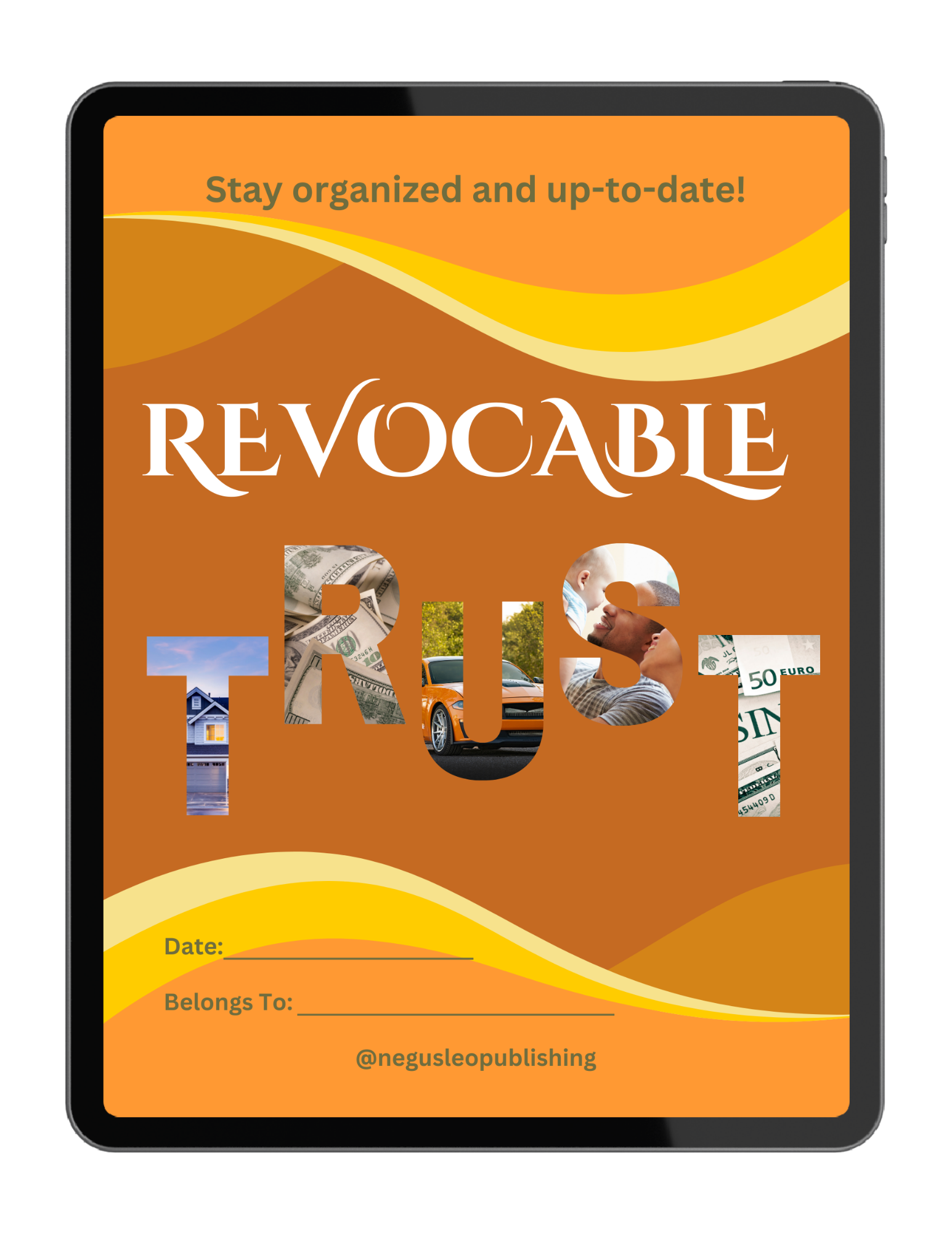
Revocable Trust
$0.00
Revocable Trust is a practical estate planning workbook designed to help individuals create a flexible legal structure for managing assets during life and transferring wealth more efficiently after death. Written in clear, easy-to-understand language, this guide explains how a revocable trust can help reduce probate complications, support incapacity planning, protect beneficiaries, and maintain financial continuity while allowing the Grantor to retain control over assets during their lifetime.
The workbook walks readers through establishing a trust, transferring property into the trust, appointing Trustees and alternate Trustees, and organizing beneficiary distributions. Readers learn how trust assets may include real estate, investments, financial accounts, vehicles, and other valuable property while retaining the flexibility to amend or revoke the trust as circumstances change.
The guide also explains Trustee responsibilities involving investment management, asset protection, discretionary distributions, tax matters, and long-term financial administration. Special sections address incapacity planning, protections for minors and dependents, creditor limitations, and successor Trustee authority during emergencies or disability.
Whether organizing family assets, planning for incapacity, or building a more efficient estate strategy, this workbook provides a structured framework for creating a flexible and legally organized trust-based estate plan.
Description
Revocable Trust is a comprehensive estate planning workbook designed to help individuals create a flexible legal structure for managing assets during life while ensuring a smoother transfer of wealth after death. Written in practical, accessible language, the guide simplifies the often complicated world of trust planning by explaining how a revocable trust can help maintain financial control, reduce probate complications, support incapacity planning, and protect long-term family interests.
The workbook walks readers through the core structure of a revocable trust, beginning with the Declaration of Trust, transfer of trust property, and the Grantor’s continuing authority to amend, revoke, or manage the trust during life. Readers learn how assets can be transferred into the trust while still maintaining personal control and flexibility until death or incapacity. The guide repeatedly emphasizes that the trust becomes irrevocable upon the Grantor’s death, creating a structured system for distributing assets according to the Grantor’s instructions.
A major strength of the workbook is its detailed treatment of Trustee authority and trust administration. The guide explains the broad powers granted to Trustees, including managing investments, retaining property, buying and selling assets, lending or borrowing funds, handling claims, participating in reorganizations, maintaining reserves, hiring professionals, and distributing assets in cash or in kind. Readers gain a clearer understanding of how trusts can function as active financial management tools rather than passive estate documents.
The workbook also addresses incapacity planning in substantial detail. Readers learn how attorneys-in-fact may transfer additional assets into the trust if the Grantor becomes unable to manage personal finances and how alternate Trustees can assume control upon resignation, incapacity, judicial determination, or death of the acting Trustee. These provisions help ensure continuity of financial management during periods of illness or disability.
Special attention is given to beneficiary protections, including provisions for minors, incompetent beneficiaries, spendthrift protections, creditor limitations, and discretionary distributions for support, education, maintenance, and comfort. The guide also includes provisions addressing estate taxes, trust situs selection, Trustee compensation, resignation procedures, and the legal authority governing the administration of the trust.
Unlike simplified trust templates, this workbook functions as both an educational resource and a sophisticated trust administration framework. Readers are introduced to advanced concepts involving trust investments, asset management flexibility, fiduciary discretion, tax allocation, and multi-generational wealth preservation strategies that are often reserved for formal legal consultations.
At its core, Revocable Trust is about maintaining control while creating structure, continuity, and long-term protection for loved ones and assets. Whether someone is beginning estate planning, organizing substantial assets, preparing for incapacity, protecting beneficiaries, or building a more sophisticated wealth transfer strategy, this workbook provides a structured framework for creating a flexible and legally organized trust-based estate plan.



Reviews
There are no reviews yet.