
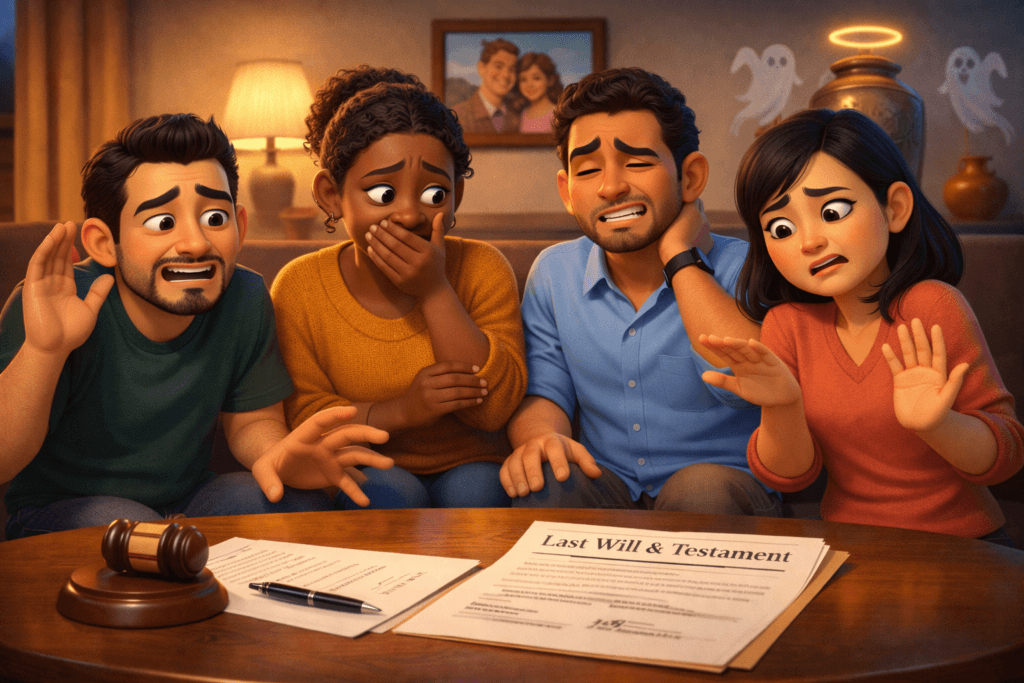
The Real Reason People Avoid This Conversation
Most people do not avoid writing a will because they are careless or irresponsible. They avoid it because thinking about death is genuinely uncomfortable, and discomfort is easy to postpone. It interrupts the rhythm of normal life, forces questions most people would rather not answer yet, and sits in a category of tasks that always feel less urgent than whatever else is happening. The problem is that postponing does not make the need disappear. It just moves the consequences to someone else.
The quiet assumption underneath most of this avoidance is that things will somehow work out. People assume their spouse will inherit everything automatically, that their family already knows their wishes, or that their estate is too small to bother with. These assumptions feel reasonable. They are also frequently wrong, and the gap between what people assume and what state law actually does can create serious problems for the people left behind.
What a Will Actually Does
A will is not primarily about wealth. It is about control, clarity, and intention. When you create one, you are making four decisions that matter more than most people realize. You are choosing who receives your property. You are naming someone to manage your estate as executor. You are designating guardians for any minor children. And you are leaving instructions about personal items that carry emotional weight beyond their dollar value. These are not bureaucratic formalities. They are decisions that your family will have to live with long after you are gone.
What Happens When There Is No Will
When someone dies without a will, the legal term is intestate, and it means the state steps in with a formula. Every state has its own rules about who inherits what, and those rules are designed to be neutral, not personal. Neutral does not mean fair in any individual sense. It means standardized. If you are married with children, assets may be divided in ways you never anticipated. If you have a long-term partner but never married, that person may receive nothing at all regardless of how long you were together or what you built with them. The law follows a chart. It does not follow your conversations, your intentions, or your history.
Families often say they will figure it out, and sometimes they do. But grief is not a stable environment for decision-making. Stress amplifies small disagreements. Money and property add pressure that close relationships do not always survive. Even siblings who get along well can find themselves at odds when the path forward is unclear and emotions are running high. A will does not eliminate all conflict, but it removes the primary fuel for it. Clear instructions are harder to argue with than assumptions.
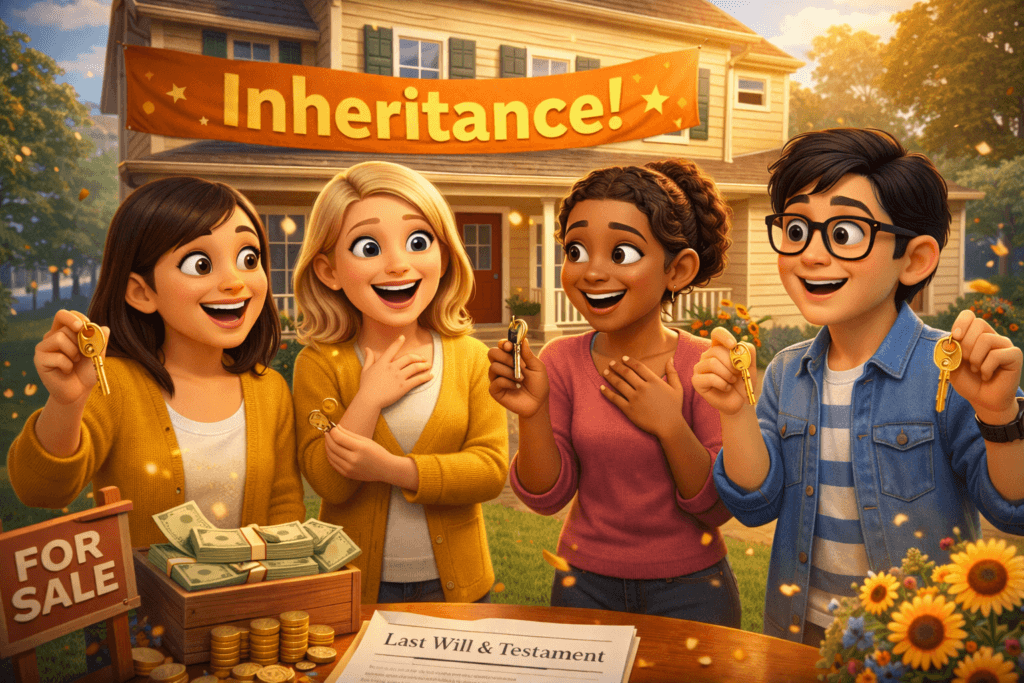
The Practical Costs of Doing Nothing
There are also practical costs to dying without one. Probate can take significantly longer without clear written direction. Legal fees tend to increase. Assets may be temporarily frozen while the court appoints an administrator, but bills and mortgages do not pause during that process. Blended families face an additional layer of complexity because children from prior marriages, stepchildren, and new spouses may all have competing expectations that state law is not equipped to resolve with any nuance.
The Myths That Keep People From Acting
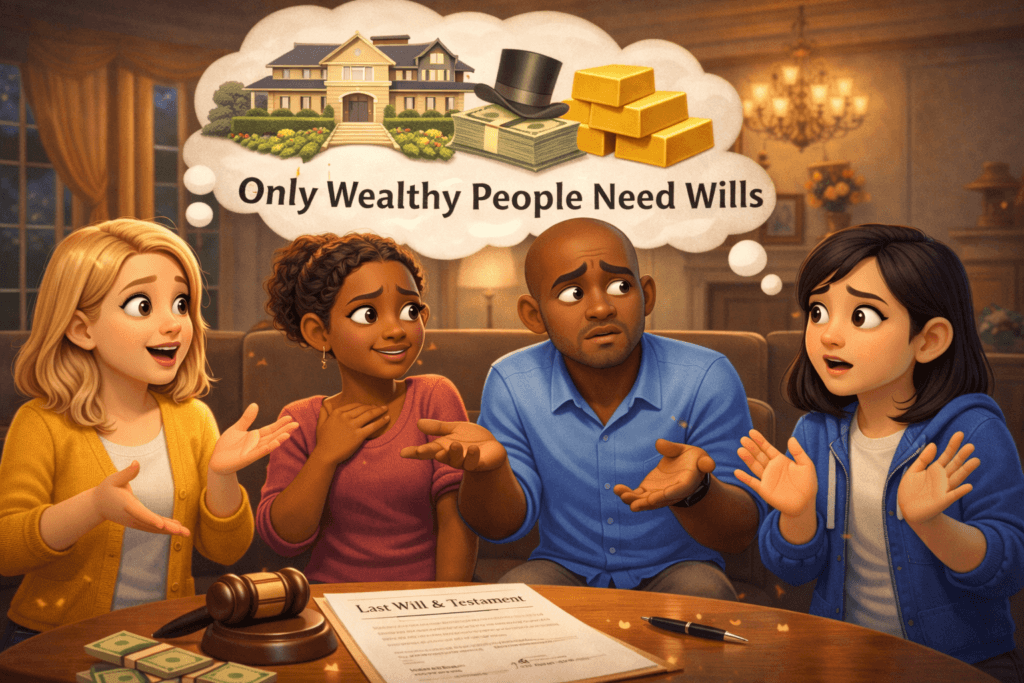
Age is not a defense against any of this. The belief that estate planning is something for older or wealthier people is one of the most persistent and damaging myths in personal finance. If you own a vehicle, hold a savings account, have retirement funds, or possess personal belongings that matter to someone, you have an estate. The size does not determine whether clarity is valuable. It only determines how complicated the mess becomes without it. Parents of minor children have perhaps the most urgent reason of all. Without a will naming a guardian, a judge must decide who will raise your child, and that decision may or may not align with what you would have chosen.
Business owners carry a separate but equally serious concern. If you own any part of a company, your ownership interest must transfer in a coordinated way when you die. Without planning, that transition can disrupt operations, create legal disputes among partners, and put something you spent years building at serious risk during an already difficult time.
This Is Not About Fear. It Is About Leadership.
At its core, writing a will is an act of leadership. It says you thought ahead. It says you cared enough about the people in your life to reduce the confusion they will face in an already painful moment. It gives your family direction when they may feel lost, reduces the chance of conflict, and ensures that decisions get made while you are clear-headed rather than by a court operating without any knowledge of who you actually were. The question is not whether you enjoy thinking about mortality. The question is whether you want your intentions to be honored when you are no longer in the room to explain them.
A will is one of the most straightforward gifts you can give the people who matter most to you, and it costs far less in time and money than most people expect. The harder part is deciding to start. If this post got you thinking about where your own planning stands, that is a good sign. Use that momentum. Negus.Leo Publishing has free resources to help you think through the decisions that matter most. Head over to the Freebies page and grab what you need to take the next step.
R.L. Canty | Negus.Leo Publishing, LLC