
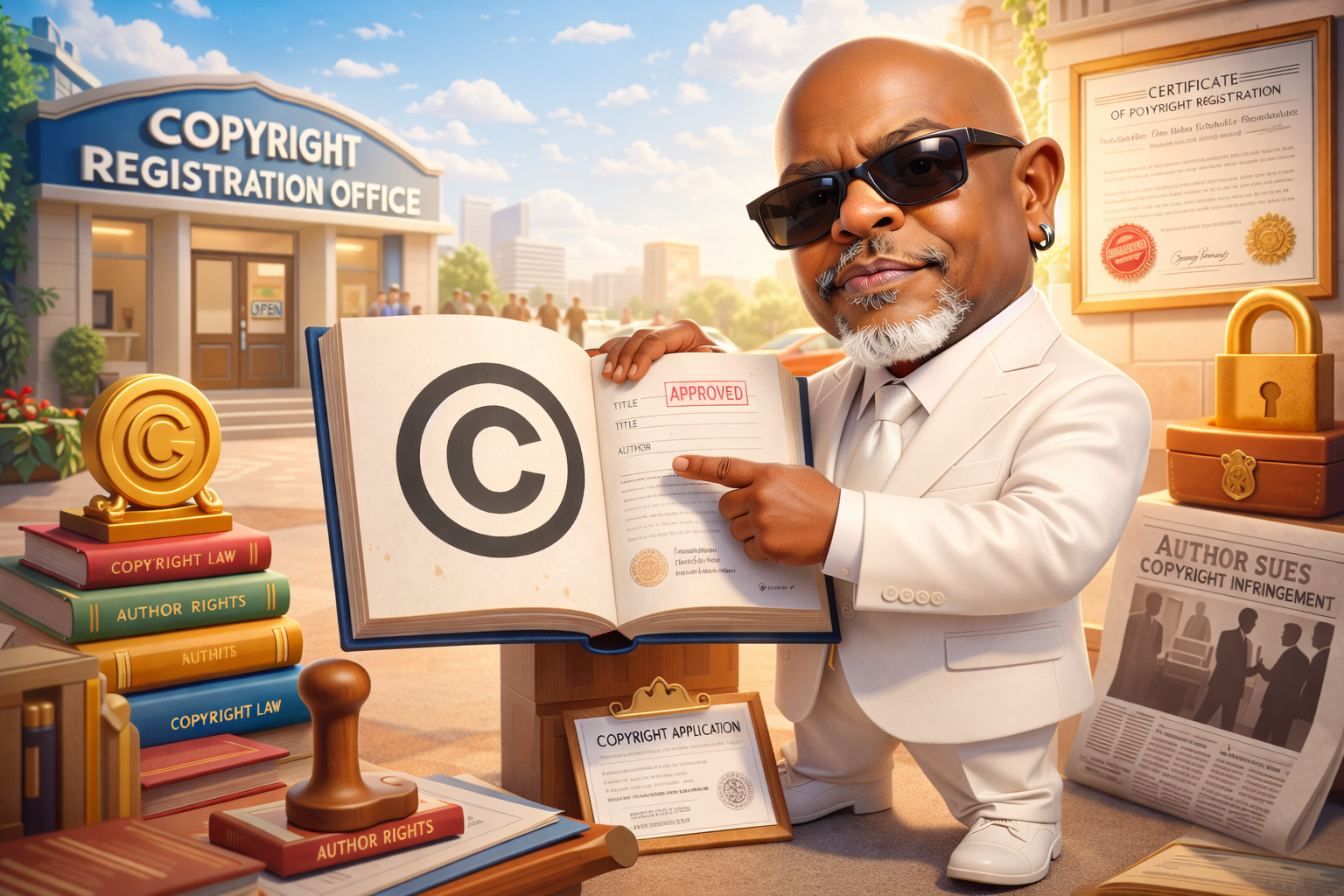
You finished your book. That alone separates you from most people who say they want to write one. You invested time, energy, and focus. Now the question shifts from creation to protection. Who owns this work? And how do you make sure that ownership actually means something?
The moment you write your book in a fixed form, you automatically own the copyright. That is how the law works in the United States. Once your words exist on paper, on your computer, or inside a formatted file, the copyright belongs to you. You do not have to fill out a form to become the owner. Creation itself gives you that right.
But automatic ownership is only the starting line. It is not the finish line.
Many authors stop there because they assume ownership equals protection. Technically, they are correct. Strategically, they are not. Owning something and being able to defend it are two different things. If someone copies your book, uploads it elsewhere, or sells it without permission, simply saying “I own this” does not solve the problem. Legal systems run on documentation, not emotion.
That is where registration comes in.
Registering your copyright with the U.S. Copyright Office strengthens your position in ways automatic ownership cannot. If someone infringes on your work and you want to sue, you must have a registered copyright before filing a lawsuit. Without registration, your legal options shrink. With registration, you gain leverage.
Leverage changes behavior. When people know there are consequences backed by law, they take you seriously.
Registration also opens the door to statutory damages. That means if someone infringes on your work, a court can award a set amount of money without you having to prove exactly how much you lost. If your copyright is not registered in time, you may only be able to recover actual damages. That requires proving financial harm, which can be complicated and expensive.
Most authors never plan for that scenario. They assume it will not happen to them. Many are right. Some are not. The internet makes copying easy. Digital distribution makes it fast. If your book gains traction, it becomes more visible. Visibility increases opportunity. It also increases risk.
The process of registering a copyright is not complicated, but it does require intention. You create an account with the U.S. Copyright Office. You complete an application under the category “Literary Work.” You pay the filing fee. You upload your manuscript. You submit. Processing can take months, but your effective date is the date you submit a complete application.
For most self-published authors, the best time to register is once the manuscript is finalized and before or shortly after publication. Waiting until infringement occurs puts you in a weaker position. Protecting before a problem arises is simply smart business.
Some creators rely on what is often called “poor man’s copyright.” This involves mailing yourself a copy of your manuscript and keeping the envelope sealed to prove the date. It sounds clever. It feels practical. It is not a substitute for formal registration. Courts do not treat it as equivalent legal protection. At best, it may help establish a timeline. It does not replace federal registration.
Understanding what copyright protects is just as important as understanding what it does not protect. Copyright covers the expression of your ideas. It protects the specific words you wrote, the structure you created, and the original content you produced. It does not protect the idea itself. You cannot copyright a general concept like “a book about financial freedom.” You can copyright your specific explanation, stories, and framework.
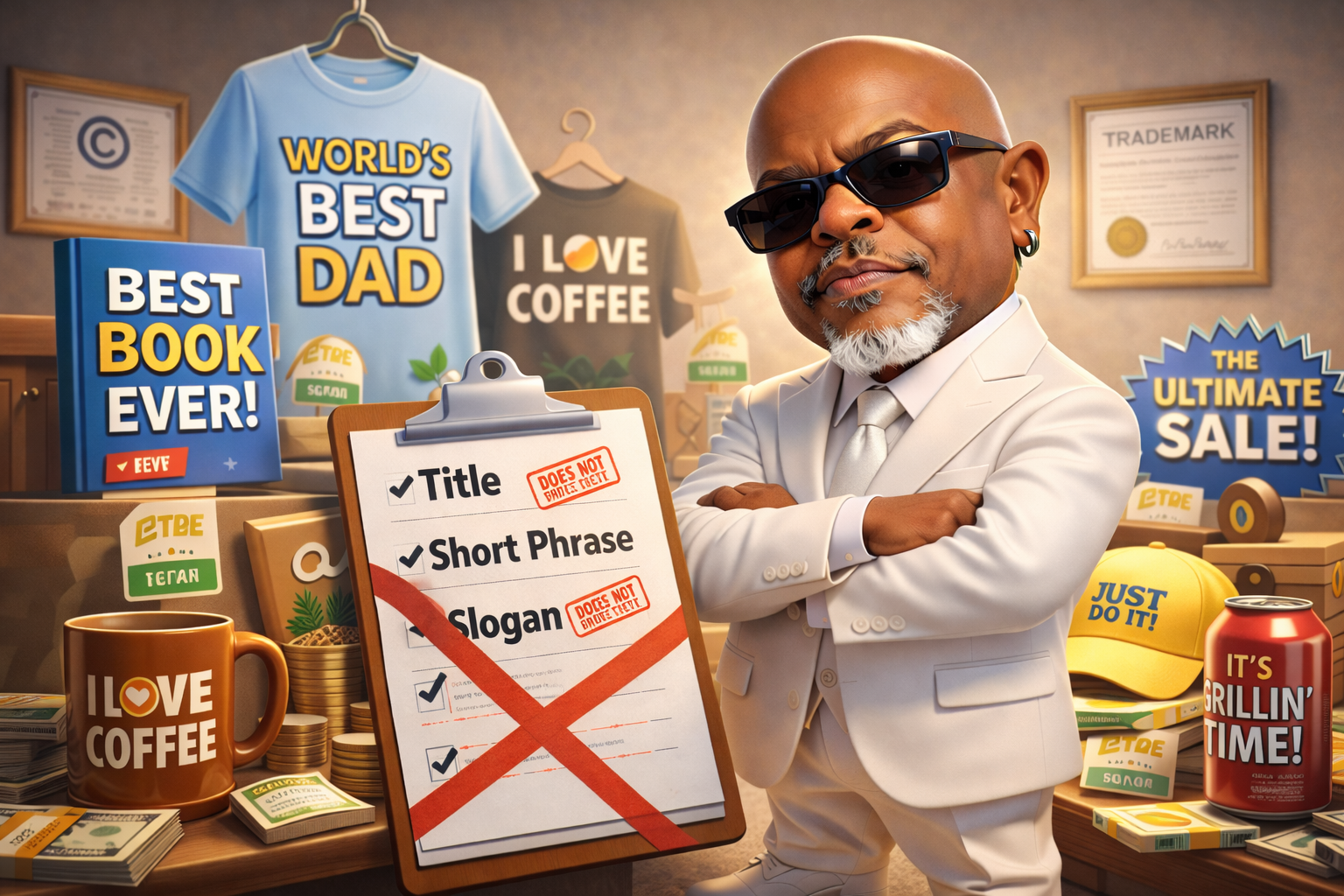
Copyright also does not protect titles, short phrases, or slogans. If you want to protect a brand name or series name, that falls under trademark law. Mixing these up creates false confidence. Authors sometimes assume they are fully protected when they are only partially covered.
Another overlooked fact is how long copyright lasts. In the United States, for individual authors, copyright protection lasts for your lifetime plus 70 years. That means your book can generate income long after you are gone. It can be licensed. It can be inherited. It can become part of your estate. Intellectual property is not just creative output. It is a long-term asset.
Many self-published authors think in terms of launch cycles. They focus on release dates, sales spikes, and marketing campaigns. Few think in terms of multi-decade ownership. Yet copyright law is built around long-term value. If you view your book as a serious asset rather than a short-term project, your behavior changes. You begin documenting ownership. You organize your files. You register your work.
Self-publishing increases both your control and your responsibility. When you publish independently, there is no traditional publisher filing paperwork on your behalf. There is no legal department quietly handling protection in the background. You are the publisher. That means you hold the rights, and you manage them.
That responsibility can feel heavy. It is also empowering. Because you own your copyright, you control how your book is used. You can create audiobooks. You can license translations. You can negotiate film or adaptation rights. You can structure partnerships. Each opportunity flows from ownership.
But ownership without documentation is fragile.
It is easy to delay registration because it feels administrative. It feels less exciting than writing. Yet protecting your intellectual property is part of the professional identity shift from hobbyist to business owner. Professionals protect assets. They do not wait for problems to force their hand.
None of this means you must operate in fear. Copyright registration is not about paranoia. It is about preparation. Most creators will never face major infringement. Some will. You cannot predict which category you fall into. What you can control is whether you positioned yourself wisely from the start.
Automatic copyright gives you rights. Registration strengthens those rights. The difference may never matter. Or it may matter more than you expect.
You wrote a book. That is not casual work. It required discipline and focus. It deserves protection that reflects its value. If you intend for your writing to last, to earn, and to represent you long term, treat it accordingly.
Creation is the first act of ownership. Registration is the second act of strategy.
Most writers stop at “The End.”
Professionals start there.
If you’re serious about building books that sell, grow, and last, subscribe to the newsletter and step inside the Negus.Leo Publishing Online Library. You’ll get practical guidance, honest insight, and strategies people actually use.
Write boldly. Publish wisely. Build something that outlives the hype.
Canty