Most Self-Publishing Advice Skips the Part That Actually Matters
There is no shortage of content online about how to self-publish a book. Type the question into any search engine and you will find hundreds of articles walking you through platforms, file formats, and upload buttons. What most of that content treats as the main event is actually the easy part. Creating an account on a publishing platform and uploading a manuscript file takes less than an hour. The decisions that determine whether your book succeeds or disappears into the noise take significantly longer and require a fundamentally different kind of thinking than most first-time authors are prepared for. Self-publishing is not a technical process with a creative component. It is a business decision with a technical component, and that distinction changes everything about how you approach it.
The authors who treat self-publishing as a series of steps to complete tend to produce books that technically exist but never find an audience. The authors who treat it as a business they are launching tend to make decisions differently from the start. They invest where it matters, protect what they build, and think past the launch date. This roadmap is written for the second group, or for anyone ready to become part of it.
The Manuscript Is the Beginning, Not the Product
Finishing a first draft is a genuine milestone, and it deserves to be recognized as one. It is also just the starting line. The manuscript that comes out of a first draft is raw material, not a finished product, and the gap between those two things is where most self-published books either earn their credibility or lose it permanently. Readers are not forgiving about poor editing, and they should not have to be. A book with significant errors in grammar, pacing, or structure signals to every reader that the author did not take the work seriously enough to finish it properly. That impression does not recover easily, and in the age of public reviews it can follow a title for its entire commercial life.
Strong self-published books go through at least one round of substantive editing before they reach a reader. That means looking at structure, pacing, clarity, and logic before ever touching sentence-level corrections. Many authors work with a professional editor for this stage. Others build relationships with writing partners who can provide honest, detailed feedback rather than general encouragement. Either path works. What does not work is deciding the draft is close enough and moving straight to upload. The manuscript is the foundation everything else rests on, and a weak foundation produces predictable results regardless of how well everything above it is executed.

Cover Design Is a Business Decision, Not a Creative One
Most authors understand intellectually that cover design matters. Fewer understand why it matters in practical business terms. A cover is not decoration and it is not an expression of personal taste. It is a sales tool that works in an environment where readers make decisions in under three seconds based almost entirely on visual information. In that environment, a cover that looks homemade, uses mismatched fonts, or fails to communicate the book’s genre instantly is not just aesthetically weak. It is commercially ineffective, and the cost of that ineffectiveness is paid in lost sales every single day the book is live.
Professional cover designers who specialize in book publishing understand genre conventions, thumbnail visibility, and the visual signals that make readers stop scrolling. These are skills that take years to develop and are not transferable from general graphic design experience. An author who produces a cover using accessible tools without that specific knowledge is almost always producing something that looks like it was made by someone who does not know the market. Readers recognize that immediately, whether consciously or not, and the assumption that follows is rarely favorable to the book’s content.
Choosing a Platform Is About Distribution Strategy, Not Just Convenience
The two platforms that dominate self-publishing conversations are Amazon’s Kindle Direct Publishing and IngramSpark, and understanding what each one actually offers is more important than simply picking the more familiar name. KDP provides access to Amazon’s massive retail audience and makes eBook publishing straightforward. IngramSpark specializes in connecting print books to libraries, independent bookstores, and a broader wholesale distribution network. These are different tools serving different strategic purposes, and the right choice depends on where your readers are and how they prefer to buy books.
Some authors publish through both platforms to maximize reach. Others focus exclusively on one based on their specific goals and audience. Draft2Digital and direct sales through an author website are additional options worth understanding before making a decision. The platform conversation is fundamentally a distribution strategy conversation, and it belongs early in the planning process rather than at the end after everything else is already finished. Knowing where your book will live and how readers will find it should influence decisions made earlier in production, including formatting, pricing, and how the book description is written.

Marketing Is Not Something You Add After Publishing
The belief that publishing a book creates its own momentum is one of the most persistent and damaging myths in self-publishing. A book going live on a retail platform does not generate visibility on its own. Algorithms favor books that are already selling. Search results favor books that are already optimized. Recommendation systems favor books that are already accumulating reviews. All of these systems reward books that arrive with some existing momentum rather than creating momentum from scratch, which means the marketing work that actually matters begins before publication, not after.
Building an email list of readers who are already interested in your subject gives you a launch audience that does not depend entirely on platform algorithms. Generating advance reviews from beta readers or early copies provides social proof at the moment new readers first encounter the book. Establishing search visibility through blog content, consistent social presence, or community participation in your genre builds the kind of organic discoverability that compounds over time. None of this is glamorous work, but all of it is more effective than any amount of promotional posting done after the fact to an audience that does not yet exist.
The Financial Reality Most Authors Are Not Told
Self-publishing requires upfront investment, and the amount of that investment should be proportional to the commercial ambitions you have for the book. Editing, cover design, formatting, and any paid marketing represent real costs that vary significantly based on the quality and experience of the people you work with. Authors who treat these as optional expenses to minimize tend to produce books that look and perform like the budget they were given. Authors who treat them as business investments tend to produce books that are competitive with traditionally published titles and that continue generating returns long after the initial investment is recovered.
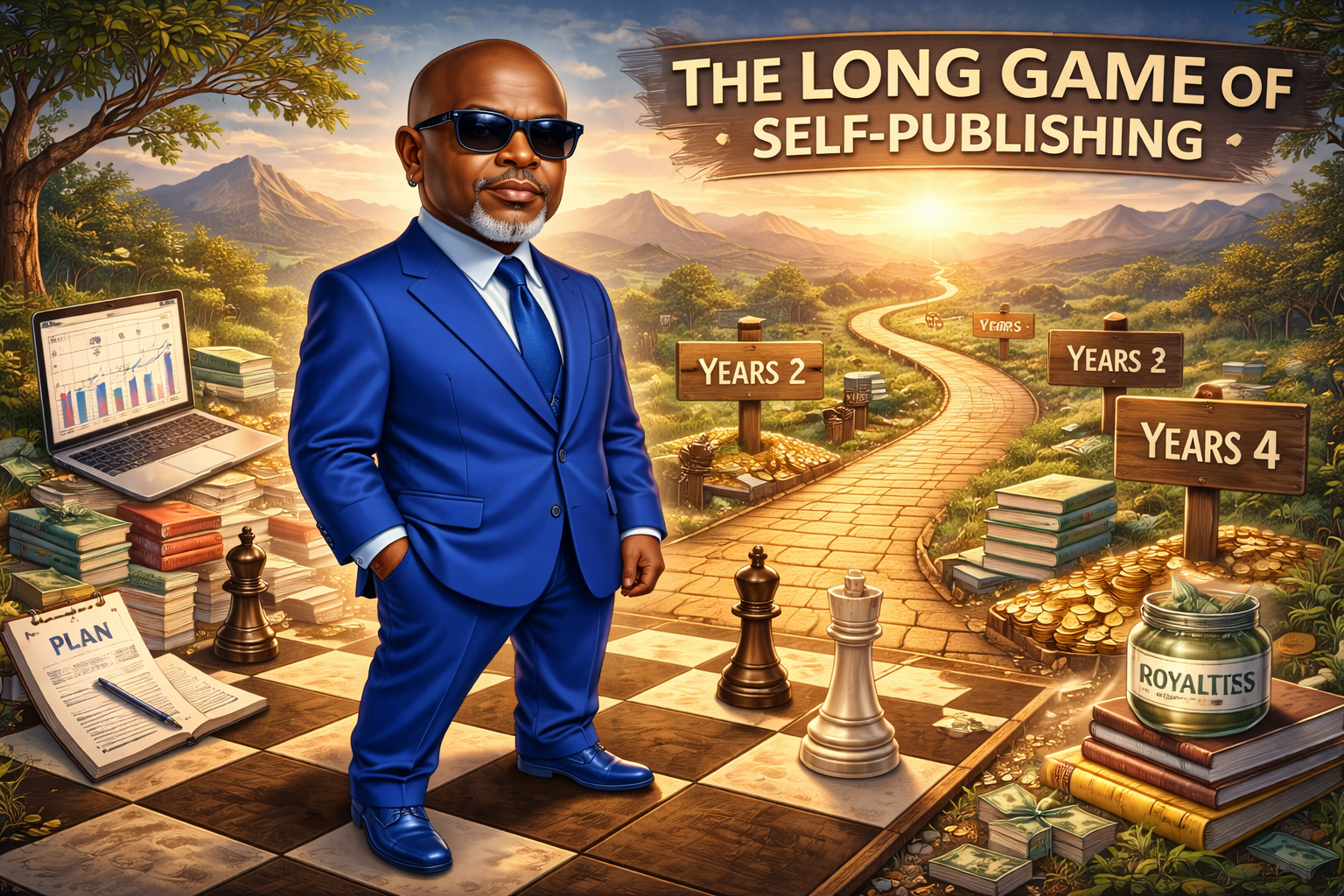
The royalty structure in self-publishing is genuinely more favorable than traditional publishing for most price points, which means a book that is positioned and marketed effectively can recover its production costs and generate meaningful ongoing income. That outcome requires treating the publishing process as a business from the beginning, making decisions based on long-term value rather than short-term cost reduction. The authors who succeed at self-publishing over time are not necessarily the most talented writers. They are the ones who understood that writing the book was the first half of the job and took the second half just as seriously.
Take the Next Step
Self-publishing is not a shortcut and it is not a consolation prize. It is a legitimate path that rewards preparation, consistency, and a willingness to learn the business side of writing. The roadmap exists. You just have to be willing to follow it. Download free resources to support your publishing journey and take the next step with something concrete in your hands.
R.L. Canty | Negus.Leo Publishing, LLC